Restore the Dancefloor - Because birds need space to sing, dance, and thrive, and so do we.
You felt it on the dancefloor. The aliveness — the remembrance that we get to be here, together, on this gorgeous planet where music, birds, and their song also exist.
That feeling of space and encouragement to be fully, wholly alive? Birds need a place to have it too.
Birds dance. They sing. They court, they call, they migrate thousands of miles guided by stars and magnetic fields and the memory of places that feel like home. But to do all of that — to be fully, wildly themselves — they need habitat. Intact, living, breathing habitat. And over the past century, we have been quietly, steadily taking it away.
This is not a story to make you feel guilty. Nor ashamed. It is not your fault, but rather systems we have all been victim to and disempowered by. Plus, guilt and shame narrow us. Guilt and shame are not truths, but limiting beliefs that separate us, for to the Earth we belong. Wholly. Fully. As we are.
This is, instead, a story to remind you that you are capable — because you are. That you have sovereignty in the microcosmic experience that is life moving, coursing through you. Sovereignty through you allowing yourself to be wholly alive, to be a participant in this infinitely relational existence. To embody that relationalism in each moment. And because the science is clear: what we do in our own landscapes, our own neighborhoods, our own communities matters enormously. Every yard is a potential dancefloor. Every native plant is an invitation back, an opportunity to return a slice of home to Birds, Insects, and the very plants we are helping to take root.
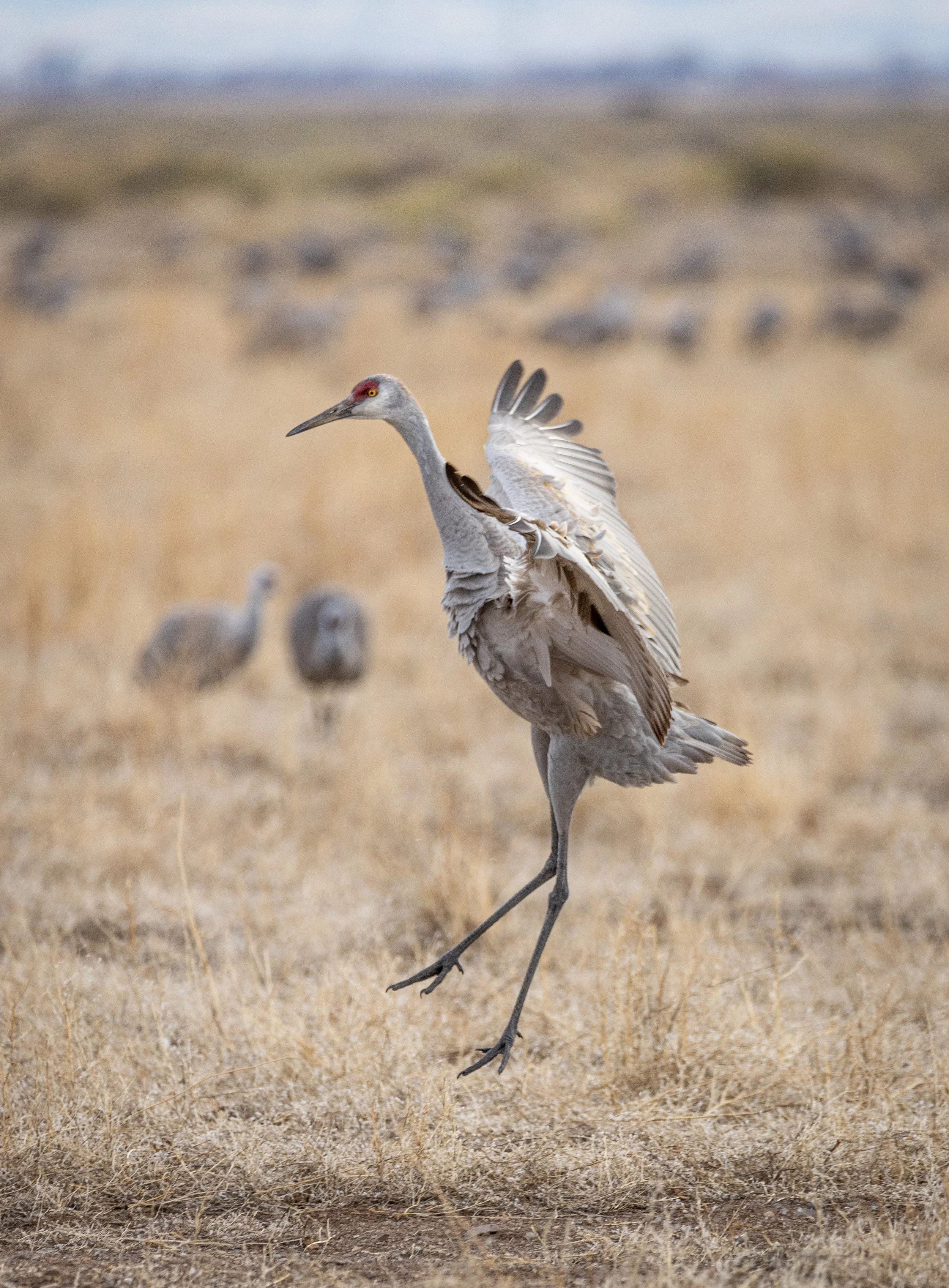
According to the 2025 U.S. State of the Birds Report — produced by a coalition led by the Cornell Lab of Ornithology and the National Audubon Society — North America has lost nearly 3 billion birds since 1970. That is one in four birds, gone in less than a human lifetime. The 2025 report reveals that more than one-third of U.S. bird species are now of high or moderate conservation concern, with 229 species requiring urgent action. Populations are declining across almost every habitat — grasslands, forests, wetlands, coastlines.
The primary driver? Habitat loss.
Over the past century, urbanization transformed 150 million acres of once-intact, ecologically productive land into buildings, pavement, and — perhaps most surprisingly — lawn. The modern obsession with manicured grass has created over 40 million acres of green monoculture across the country: beautiful to look at, and nearly silent. No insects. No seeds. No shelter. No song.
According to the National Audubon Society, most of the landscaping plants available in nurseries today are species from other continents — and while they may look lovely, they have no relationship with the insects that birds depend on. Research by entomologist Doug Tallamy has shown that a native oak tree supports over 500 species of caterpillars, while a commonly planted non-native ginkgo supports only 5. And when it takes over 6,000 caterpillars to raise a single brood of chickadees — that difference is not small. That difference is the difference between a yard that sings and one that doesn't.
The remaining isolated natural areas, fragmented by development, are simply not large enough to sustain wildlife on their own. Birds need connected landscapes — corridors of habitat that allow them to move, to migrate, to find food and shelter and one another.
We have fragmented the dancefloor. And now, together, we can begin to restore it. Dance to dance, plant by plant.
The State of The Song
Let’s begin:
What is a microcorridor?
Imagine a bird trying to migrate through a city. What was once a continuous ribbon of forest or meadow is now a patchwork of parking lots, lawns, and isolated parks. Each fragment of green is an island — and islands, however beautiful, cannot sustain what a connected landscape can.
A microcorridor is a small but mighty thread of habitat that connects those islands. A strip of native plantings along a fence line. A pollinator garden that bridges a backyard to a neighbor's yard and then to the park beyond. A community plot that becomes a waystation for migrating warblers. Individually, these patches may seem modest. But the Cornell Lab of Ornithology's research makes clear that habitat connectivity — the ability of birds and wildlife to move through landscapes — is one of the most critical factors in species survival.
We don't need to wait for large-scale policy to begin. We can start in our own square footage. Plant by plant, yard by yard, block by block, we can weave the dancefloor back together, braiding harmony in the ecosystem with our very own hands. How hopeful. How powerful. Let us accept and embrace this power we have to make a difference. Not power as in power over, but power as in power with. That together, we can both root and rise.
The good news? We can make a difference!
Root, restore, and rise where you are:
One Plant - Anyone, any space, any budget. One native plant in a pot on your balcony is a real act of restoration. It is food for insects, which are food for birds, which are part of the web that holds us all. Start here. Even just one sunflower (if they grow in your area), can feed dozens of Birds!
Your Yard - Replacing even a portion of conventional lawn or ornamental plants with native species creates living habitat. According to the National Audubon Society, native plants have co-evolved complex relationships with native birds and insects over thousands of years — and removing them severs critical ecological connections. Use Audubon's Plants for Birds at audubon.org/plantsforbirds to find the native plants that belong in your specific zip code.
One Window, One Feeder - A bird feeder or bath in a small outdoor space can help provide small spaces of habitat restoration. A daily, cleaned bird bath, or a bird feeder full of seeds for your regional species, both offer small microhabitats of nourishment and hydration for our feathered friends.
Your Neighborhood And City - Talk to your neighbors. Start a community native plant garden. Propose a pollinator corridor along a shared fence or alleyway. Advocate for bird-friendly building standards, native plantings in public spaces, reduced light pollution during migration season, and wildlife corridor policies. Attend a city council meeting. Reach out to your HOA or neighborhood board or city. (We've written you a letter template for both — download below.)
Resources to get started
-
The earth is not asking us to save it from the outside. It is asking us to remember that we are part of it — and to act from that remembrance.
When birds have habitat to sing and dance and thrive, the whole web of life grows stronger. When we have spaces to move and express and feel wholly alive, we grow stronger too. These are not separate projects. They are the same project. They always were. Aliveness begets aliveness, aliveness protects aliveness.
Restore the dancefloor. Wherever you are. However you can. One plant, one patch, one community at a time.
-
Find Your Native Plants → Audubon's Plants for Birds: audubon.org/plantsforbirds — search by zip code for native plants that support your local bird species
→ National Wildlife Federation Native Plant Finder: nwf.org/nativeplantfinder — find plants that host the highest numbers of wildlife in your area
Track & Contribute to Bird Science → eBird (Cornell Lab): ebird.org — record what birds you see and contribute to global population data
→ Merlin Bird ID (Cornell Lab): Free app to identify birds by sight and sound — merlinbirdid.com
→ Project FeederWatch (Cornell Lab): feederwatch.org — count birds at your feeder and contribute to real scientific monitoring
Learn More → 2025 State of the Birds Report: stateofthebirds.org — the most current, comprehensive look at bird population health in North America
→ Why Native Plants Matter (Audubon): audubon.org/content/why-native-plants-matter
-
Your voice matters! Just as your actions ripple outwards, so do your words. Let’s start conversations of change by reaching out to our communities and our cities. Download the templates below!